« Energy independence requires dispatchable low-carbon energy sources and enhanced grid flexibility »
« Energy independence requires dispatchable low-carbon energy sources and enhanced grid flexibility »
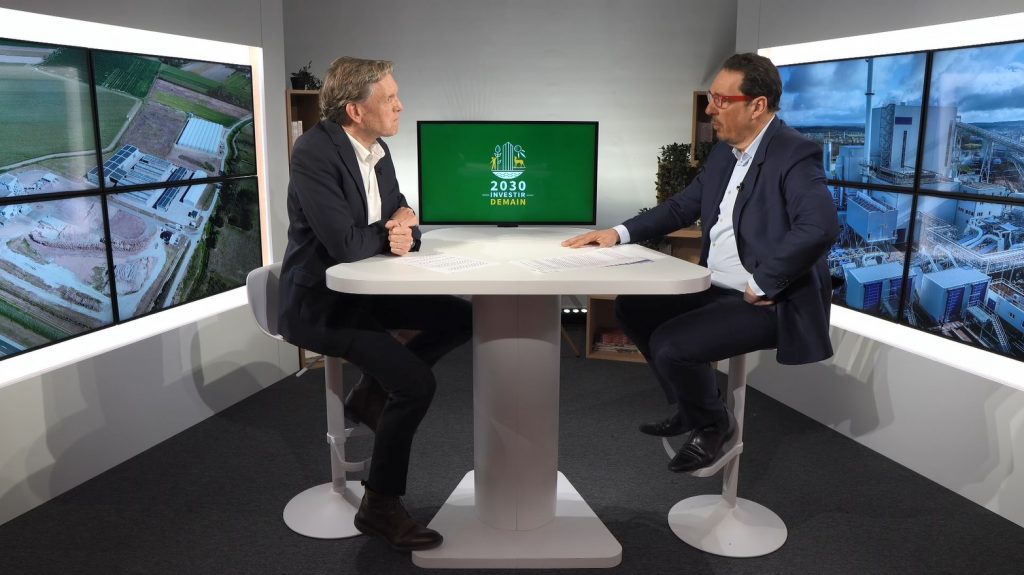
Video interview with Jean-Christophe Guimard, Co-Founder and Chairman of PEARL Infrastructure Capital.
Renewable energy appears as a key element in the decarbonisation of our economy and our energy sovereignty. However, certain obstacles remain. Edmond de Rothschild Asset Management leads, within the think tank “2030, Investing for Tomorrow”, the working group dedicated to European sovereignty and more specifically to the link between sovereignty and sustainability.
In this context, Jean-Christophe Guimard, Co-Founder and Chairman of PEARL Infrastructure Capital, details in this video interview these challenges, as well as the solutions to be implemented, in particular the projects financed by the Pearl Infrastructure Capital funds, a private equity player in the energy and ecological transition and a member of the Edmond de Rothschild Private Equity platform.
More stable, dispatchable and storable low-carbon energy
“Most of Europe has made significant investments in solar and wind energy. However, these have the drawback of being intermittent and therefore destabilising electricity grids, sometimes causing outages, as in Spain last year. In addition, the electricity market is increasingly disrupted, with wholesale prices turning negative at certain periods due to the influx of solar or wind energy,” analyses Jean-Christophe Guimard.
Electricity grids are ageing and were built around large, centralised production units. They were not designed for a multitude of decentralised and intermittent renewable energy production units.
“It is therefore necessary to have more stable, dispatchable and storable low-carbon energy sources such as biomass, biomethane, waste and biofuels, which have significant potential, as well as nuclear power. In addition, hybrid flexibility solutions, particularly software-based tools enabling better management of electricity supply and demand, as well as storage facilities such as batteries, need to be implemented to better support the grids,” he states.
Managing electricity consumption and production in real time at the local level
In practice, the Pearl Infrastructure Capital II SCA, RAIF fund has invested in Energy Pool, a French company specialising in energy consumption optimisation.
“Our energy independence depends on better management of our electricity grids. The objective of ‘energy management’ is to manage electricity consumption and production in real time and at the local level, through software systems, in order to relieve the grids. This is how Energy Pool manages energy flexibility, by working with industrial consumers directly at the level of an industrial site, and also by anticipating the intermittency of renewable energy,” explains Jean-Christophe Guimard.
Biomass meets both decarbonisation and sovereignty objectives
At the same time, the fund has also financed the creation of an energy plant based on biomass in eastern France, which meets both decarbonisation and sovereignty objectives.
It is the largest cogeneration plant in France based on recycled wood. It supplies electricity to around 50,000 households, and also provides all the thermal energy needs required by one of the largest paper and cardboard manufacturing units in France, amounting to 1,000 GWh.
“The waste wood used, around 250,000 tonnes per year, comes either from end-of-life furniture or from deconstruction or demolition operations of buildings. It is therefore a 100% local supply, making the production of this biofuel highly favourable to our sovereignty. This is all the more the case as 100% of the technologies used to build this type of installation come from Europe,” notes Jean-Christophe Guimard.
He concludes that “the combined contribution of these energy sources : biomass, waste, biogas and various biofuels could represent, by 2050, up to a quarter of our primary energy needs in Europe.”

