Mental Health in the Workplace: “We Need to Change the System”
Mental Health in the Workplace: “We Need to Change the System”
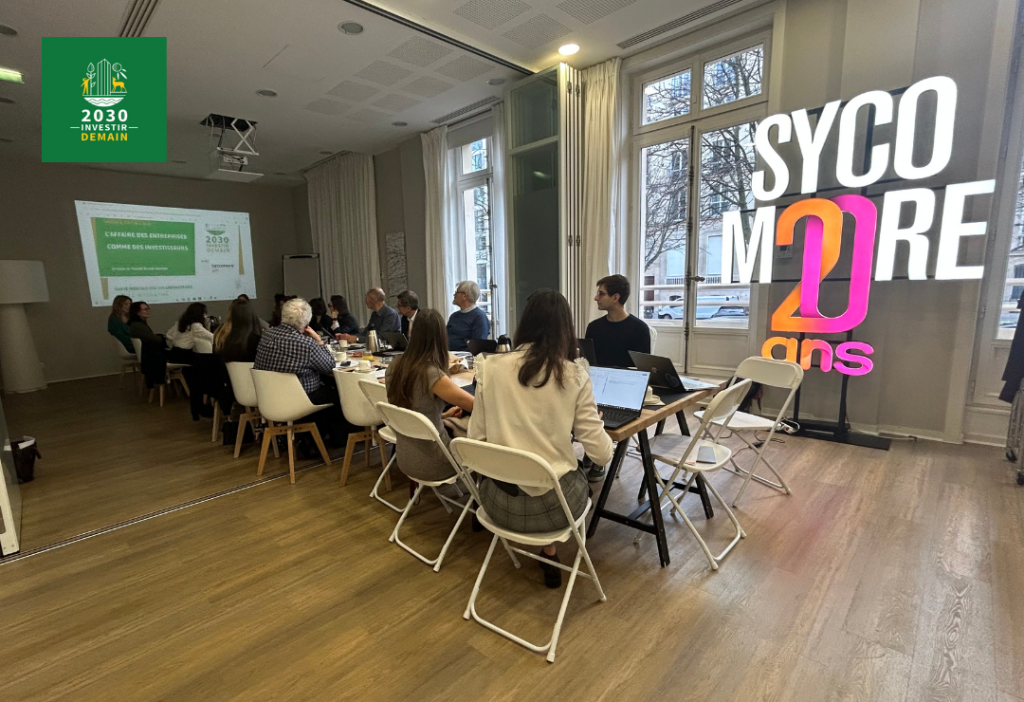
How can we move from intention to action? As part of the Think Tank “2030, Investing for Tomorrow”, investors, experts and companies structured the discussions of their second workshop around the operational implementation of mental health policies within organisations.
Following a first workshop dedicated to defining the scope and contours of workplace mental health, the working group “Mental Health: A Responsibility for Both Companies and Investors”, co-founded by Sycomore AM as part of Season 2 of the Think Tank “2030, Investing for Tomorrow”, reconvened on January 26. The objective of this new session was to move to a more operational level by identifying concrete levers for action, sharing feedback and challenging how companies measure the effectiveness of the initiatives they put in place.
A systemic issue
The discussions opened with a presentation of the Mental Health Benchmark developed by CCLA Investment Management. For Amy Browne, Director of Stewardship and Deputy Head of Sustainability at CCLA, workplace mental health is a systemic issue. “This is a problem that concerns all companies with employees. We need to change the system,” she stated. According to the data presented, mental health-related disorders represent an average cost of USD 2,600 per employee per year for companies, while every dollar invested in improving mental health is estimated to generate a return of USD 4.7.
CCLA’s initiative originated in the 2020 health crisis. At the time, the asset manager reached out to major UK companies to encourage them to protect their employees’ mental health. “We received many positive responses, but we also observed a lack of coherent strategy behind the initiatives,” explained Amy Browne. Built around 27 questions aligned with the recommendations of the World Health Organization (WHO) and the International Labour Organization (ILO), the Mental Health Benchmark does not aim to measure individual wellbeing, but rather the maturity of companies in their approach to workplace mental health.
The central role of leadership
The initial findings highlight the importance of explicit leadership commitment. “When leaders speak openly about these issues, it significantly contributes to reducing stigma,” Amy Browne noted. The formalisation of dedicated policies, the setting of clear objectives and the training of line managers also emerged as structuring levers. For investors, these elements represent key entry points for engagement with companies, even if the correlation with financial performance remains difficult to establish at this stage.
The discussion then turned to corporate feedback. At Orange, Esther Szwarc, Coordinating Physician, identified “three areas of focus” to address mental health: “raising employee awareness, training and sensitising managers and HR teams, and all aspects relating to collective and individual prevention.” She stressed the need to structure these actions and ensure consistency between leadership messaging and actual implementation: “employees need to feel that everything is aligned, otherwise it is not effective. If, on the one hand, companies multiply surveys or ‘cosmetic’ initiatives such as relaxation sessions or massages, but on the other hand mental health is not genuinely taken into account in transformations, change management or project support, then the overall approach loses coherence.”
According to her, integrating mental health into the company’s overall strategy is also a necessary condition. “If it does not come from the top, it cannot work,” she added.
The consulting firm Wavestone presented a structured approach based on the employee journey. “The topic is addressed from onboarding,” explained Hélène Cambournac, Chief Sustainability Officer. Line managers receive dedicated training on psychosocial risks, complemented by targeted measures depending on seniority or exposure to risk. Clémence Lagu, Head of HR, underlined the impact of leadership testimonies: “when senior managers illustrate these issues through their own experience, it is always more impactful.” The company is also piloting digital prevention tools such as the teale platform, enabling employees to assess their mental health, access dedicated content or, if necessary, receive therapeutic support.
Questioning work organisation
However, this multiplication of initiatives raises a central question: the risk of addressing mental health through tools without sufficiently questioning work organisation. For Nina Tarhouny, PhD in law, specialist in organisational prevention of psychosocial risks and founder of the consultancy Global Impact, “despite all the actions implemented, working conditions sometimes remain detrimental because work organisation itself is not sufficiently examined.” She recalled that while appointing a dedicated prevention officer is not mandatory as such, “the duty of prevention is mandatory, regardless of the size of the company.”
“When a small company does not have the means to appoint a dedicated prevention employee, it designates what is known as a ‘competent designated employee’. This is an employee appointed and trained by the employer to implement prevention measures within the company. But this does not replace the employer’s responsibility regarding prevention,” she specified.
According to Nina Tarhouny, one of the main pitfalls lies in placing responsibility for mental health on individuals or managers without providing a clear framework. “We ask a lot of managers, but we do not always clearly define what is expected of them,” she observed. She advocated clarifying managerial instructions and decision-making latitude, comparing work organisation to a “prompt”. “As with artificial intelligence, objectives, resources, deadlines and expected outputs must be clearly defined. Otherwise, insecurity is created.” In her view, as long as these elements are not explicitly clarified, prevention actions remain fragmented and insufficiently effective.
Adapting measures to operational realities
This assessment was shared by Alice Gorvel, Medical Director and Head of Occupational Health at Saint-Gobain, who also stressed the need to adapt initiatives to operational realities. “We will not train employees, HR teams and managers in the same way,” she recalled, adding that in an industrial group, equity considerations are central, particularly regarding remote work. “Saint-Gobain is an industrial company. Executives make limited use of remote work, notably to avoid creating inequalities with site employees,” she explained. At headquarters, remote work is authorised “around two days per week,” but remains structured and supervised.
Regarding the role of managers, Alice Gorvel also warned against an excessive burden of responsibility. “It places a significant weight on them,” she acknowledged, recalling that “managers themselves can also be under strain.” She emphasised the importance of training them on what they are allowed to do, particularly when an employee is on sick leave. “Maintaining contact is essential, but one must know how to do so without putting oneself at risk.”
“Tackling root causes”
Digital tools also fuelled the debate. While some companies have opted for external platforms, others have chosen to internalise monitoring. At Saint-Gobain, “30% of employees are monitored by in-house medical services, the others by external inter-company services,” Alice Gorvel specified. In addition to this internal or external medical follow-up, all employees have access to a psychological support platform enabling them to self-assess, receive training or be connected with a psychologist if needed.
“Platforms are not a miracle solution,” Esther Szwarc warned, stressing the need for heightened vigilance regarding data confidentiality and alignment with existing systems.
Throughout the discussions, a consensus emerged: primary prevention, focused on work organisation, remains the most difficult to implement, but also the most structurally transformative in the long term. “As long as we do not act on the organisation, we are addressing consequences without tackling the causes,” Nina Tarhouny concluded.

