Integrating biodiversity into sustainable investment practices: challenges and outlook
Integrating biodiversity into sustainable investment practices: challenges and outlook
What challenges arise when integrating biodiversity into investment strategies? This question is explored by Elouan Heurard, Biodiversity ESG Analyst at Candriam, and Matthieu Delabie, Biodiversity Finance and Economic Instruments Coordinator at the French Biodiversity Office and Chair of ISO Technical Committee 331 on biodiversity, in this episode of the “2030 – Investing in Tomorrow” podcast.
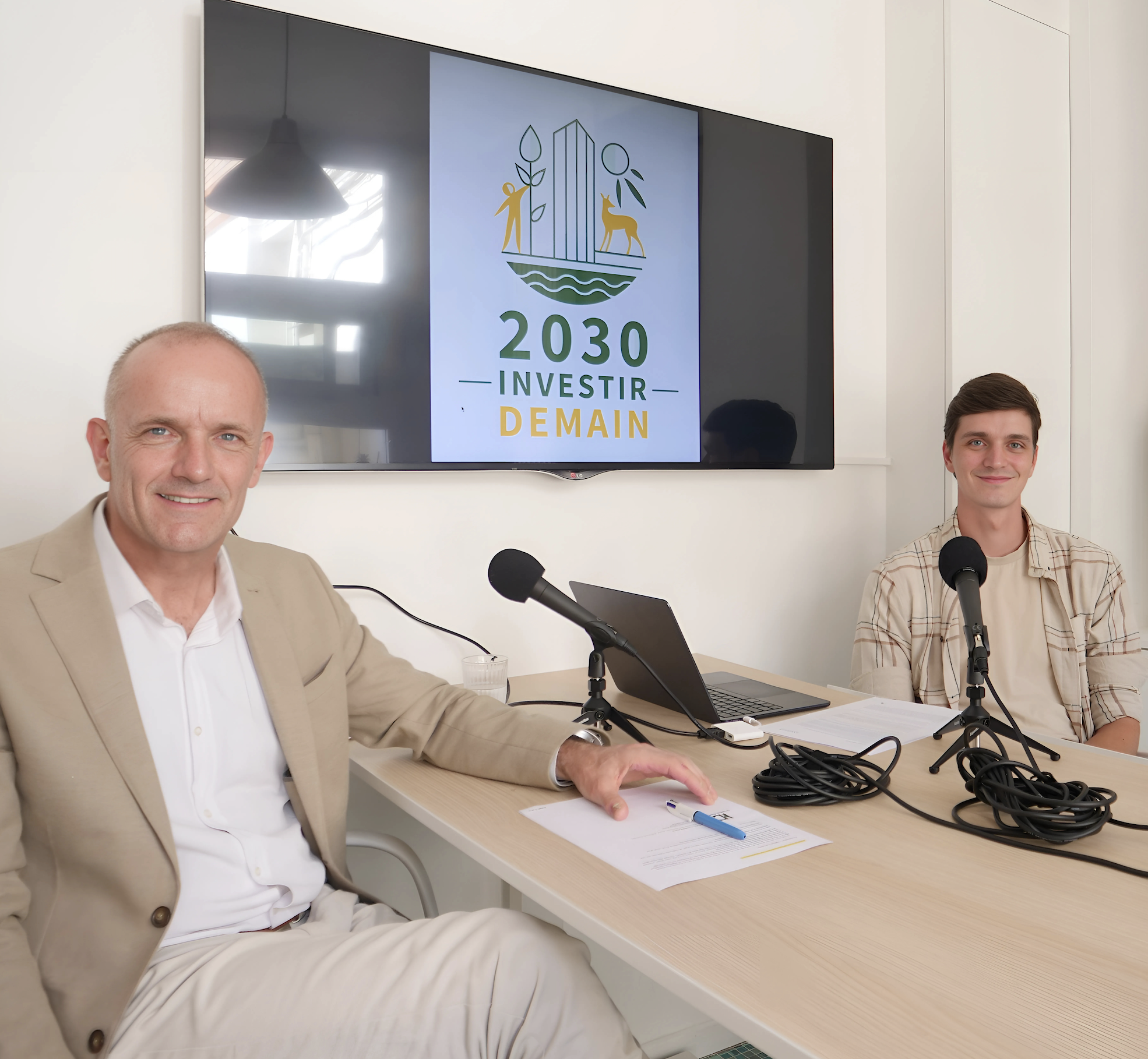
Launched in September 2024 at the initiative of the media outlets ID, L’Info Durable and L’Agefi, the Think Tank “2030, Investing in Tomorrow” aims to stimulate debate and bring together financial stakeholders around the major challenges of sustainable finance.
To date, the initiative is structured around six thematic working groups, each co-founded with a recognized organization known for its commitment to sustainability.
A necessary dialogue between biodiversity and investment
To support these reflections, a podcast series was created, with each episode dedicated to one of the working groups. This edition focuses on biodiversity through the group entitled “Implementing both granular and holistic analysis that integrates location-related challenges,” co-founded by Candriam.
Designed as a platform for dialogue, the “2030 – Investing in Tomorrow” podcast brings together the perspectives of those who finance the transition and those who implement it on the ground. In this episode, Elouan Heurard and Matthieu Delabie discuss the challenges of integrating biodiversity into investment strategies.
Informed decision-making supported by expert input
To ensure that biodiversity becomes fully embedded in investment practices, Candriam emphasizes the importance of relying on regulators and field experts to inform decision-making.
“For this, we need institutions such as the French Biodiversity Office, which can guide us toward best practices and help us integrate biodiversity considerations into investment strategies in the most rigorous way possible,” explains Elouan Heurard.
While biodiversity and investment may initially appear difficult to reconcile, Heurard notes that the topic has gained increasing prominence since the 2022 Kunming–Montreal agreements.
“In many ways, this is the natural extension of the thinking that began with carbon: we now need to consider nature as a whole and measure the footprint left by our economic activities.”
Tools still under development
Although companies are beginning to address these issues, they rely on tools that are still recent or evolving. This raises important questions about indicators: which should be selected to obtain reliable measurement? Can a single indicator capture the complexity of biodiversity?
For Matthieu Delabie, the answer is clear:
“A single indicator will not be sufficient when it comes to biodiversity, because biodiversity is a multifactorial issue.”
If the objective is genuinely to reduce biodiversity footprint, it is essential to understand in detail what drives it, in order to identify the most relevant levers for action for each component.
Defining appropriate indicators is therefore a key first step. However, turning these measurements into concrete action requires access to detailed data on the various components of biodiversity.
“It is not enough to have an overall measure of biodiversity footprint. If we truly aim to reduce it, we must understand in detail what generates it, so that we can identify targeted solutions for each component,” Heurard explains. “For example, if a company’s carbon footprint is driven 20% by greenhouse gas emissions, it will need to prioritize this issue. Similarly, if 15% is linked to water consumption, solutions must be found, whether through technological innovation or changes in practices.”
Looking beyond the company
However, while precise data is essential, it is not sufficient. Matthieu Delabie stresses the importance of examining the environment in which a company operates.
“Today, we fail to account for the fact that nature provides human activities with services equivalent in value to a GDP, free of charge. In our economic calculations, we consider that restoring or achieving net-zero impact has a cost, but we do not account for the ‘free’ share from which economic actors benefit. Ecosystem services are a perfect example. Failing to preserve this natural capital also means risking its loss.”

