Energy infrastructure: investors must be able to identify pioneers
Energy infrastructure: investors must be able to identify pioneers
What role can investors play in supporting field operators as they develop innovative energy solutions? This question is addressed by Shirley Chojnacki, Head of Energy Infrastructure Investment at Edmond de Rothschild Asset Management, and Michael Coudyser, CEO of Corsica Sole, in this episode of the “2030 – Investing in Tomorrow” podcast.
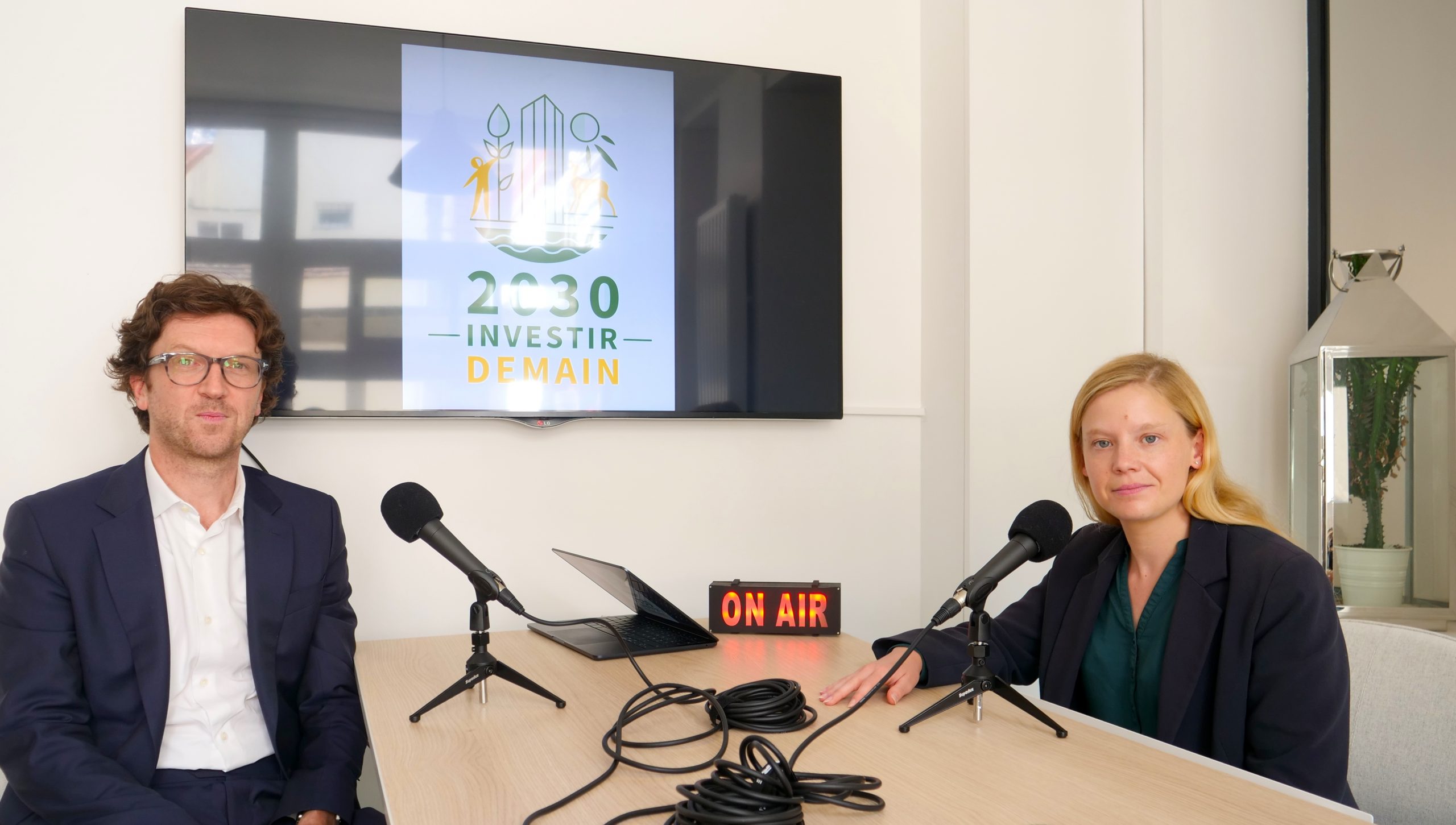
Launched in September 2024 at the initiative of the media outlets ID, L’Info Durable and L’Agefi, the Think Tank “2030, Investing in Tomorrow” seeks to stimulate debate and bring together financial stakeholders around the major challenges of sustainable finance.
To date, the initiative is structured around six thematic working groups, each co-founded with a recognized organization known for its commitment to sustainability. A podcast series accompanies this work, with each episode dedicated to one of these groups. This new episode focuses on urbanization through the working group entitled “A Marshall Plan for the City of the Future,” co-founded by Edmond de Rothschild Asset Management (EDRAM).
A Continuous Dialogue
Designed as a platform for dialogue, the “2030 – Investing in Tomorrow” podcast aims to bring together the perspectives of those who finance the transition and those who implement it on the ground. In this episode, Shirley Chojnacki and Michael Coudyser share their respective experiences and their collaboration on energy storage projects.
This exchange provides an opportunity to address issues related to energy sovereignty and grid security in the context of ongoing sector transformation.
Gradual Expansion at European Scale
Founded fifteen years ago by Michael Coudyser, Corsica Sole has experienced steady and structured growth, driven by innovation in solar power and storage.
“We started with small photovoltaic plants. Then larger ones, combined with storage. Projects gradually expanded: to mainland France and to other islands,” explains the CEO. “We also developed standalone battery systems without solar panels. We then expanded internationally: first in Belgium with EDRAM, and now through new projects under development in Estonia, Italy, Poland, and the Czech Republic.”
A Fund Dedicated to Transition Infrastructure
For her part, Shirley Chojnacki works within the Bridge fund managed by EDRAM. With €6.5 billion in assets under management, this fund invests across several sectors: energy, digital infrastructure, transport, and social infrastructure.
As Head of Energy Infrastructure Investment, she oversees energy-related projects, including investments in battery storage systems. It was within this framework that EDRAM supported Corsica Sole in the development of a project in Belgium.
According to her, Corsica Sole is among the pioneering players in this technology.
“They were among the first energy producers to install batteries initially alongside solar farms, and then to take risks by deploying batteries directly on the grid in Belgium to help regulate it,” she explains. “What we truly value is working with partners who can anticipate market developments and act pragmatically. Ultimately, what we seek is a long-term relationship built on genuine, transparent dialogue—whether to seize new opportunities or to address project challenges when they arise.”
A Structured and Rapid Collaboration
For Corsica Sole, EDRAM’s involvement significantly accelerated project deployment. Michael Coudyser highlights his partner’s adaptability:
“Did we imagine going this far? Yes. But this quickly? No. We were truly impressed by EDRAM’s command of the project. Everything moved very fast, and we reached an agreement in record time—eight months in total. For an investment of several tens of millions of euros, in a completely new market with relatively young technology, we had initially expected a timeline closer to two years.”
Beyond the technical aspects, Shirley Chojnacki notes that this investment also reflects EDRAM’s desire to better understand issues related to the operation of electricity grids.
“We know how critical the grid is: it helps safeguard the sovereignty of a country, or even a continent. In this context, it was a major issue for us. It was our very first financing of a grid-connected battery, and we learned a great deal from it, particularly thanks to Corsica Sole’s experience.”

