Sustainable mobility: between progress and persistent challenges
Sustainable mobility: between progress and persistent challenges
A video interview with Alexis Bossard, International Equities Portfolio Manager at Edmond de Rothschild Asset Management.
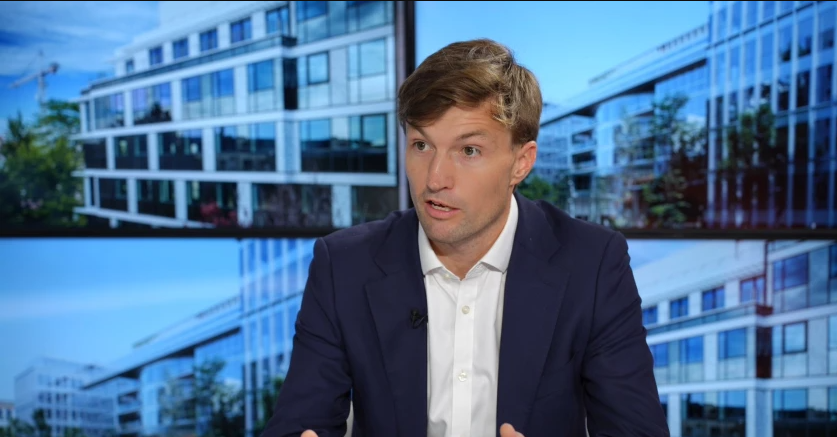
The transition toward greener mobility is well underway, but its pace remains uneven, constrained by economic, political, and industrial hurdles. As part of the working group “Urbanization: a Marshall Plan for the City of the Future” within the Think Tank “2030, Investing in Tomorrow,” co-founded by Edmond de Rothschild Asset Management in partnership with L’Agefi and ID L’Info Durable, Alexis Bossard shares his analysis of the challenges surrounding sustainable mobility.
A two-speed transition
Some segments of sustainable mobility have progressed remarkably. Soft mobility—particularly cycling—perfectly illustrates this trend. In just a few years, cities have built extensive cycling infrastructure and usage has surged, whether for commuting, school travel, or everyday errands. Public transport has also made significant progress: in France, one-third of networks are already decarbonized through the electrification of trains and buses.
However, not all sectors are advancing at the same pace. Electric vehicles, often presented as the cornerstone of the transition, are struggling to meet expectations. With a market penetration rate of barely 15% in Europe—far from the 30% initially anticipated—the sector faces two major obstacles: purchase prices still 10–15% higher than those of internal combustion vehicles, and insufficient charging infrastructure, particularly in rural areas.
“We have all heard anecdotes of drivers stranded in the middle of the Massif Central searching for a charging station,” Alexis Bossard notes, illustrating the persistent shortcomings of the network.
Barriers to an ambitious transition
The challenges are multiple and interconnected.
First, economic: rising interest rates have increased the cost of infrastructure, while households seek to preserve purchasing power, sometimes at the expense of environmentally friendly choices.
“Protecting purchasing power has at times taken precedence over the energy transition,” Bossard observes, citing Sweden’s decision to scale back its biofuel quotas.
Second, geopolitical: the war in Ukraine has not only driven up energy prices but has also pushed climate urgency into the background in the face of immediate security concerns.
“Finding substitutes for Russian gas and Saudi oil has complicated the situation,” he explains.
Finally, industrial: Europe must accelerate its development of battery production and charging networks, or risk seeing the 2035 deadline for ending internal combustion engines postponed.
“An extra year or two would not fundamentally change the outcome, but industry needs time to adapt,” he adds.
A holistic investment approach
In response to these challenges, Edmond de Rothschild Asset Management adopts a comprehensive strategy covering the entire sustainable mobility value chain.
“We do not limit ourselves to manufacturers of bicycles, electric cars, or batteries,” explains Bossard. “We also look at infrastructure players such as charging station installers, cable manufacturers, and biofuel specialists.”
He cites the example of Neste, a former Finnish refiner that has become a leader in sustainable fuels, now supplying 2% of the jet fuel used in Europe. He also mentions AXA, which has emerged as a key insurer for soft mobility and partners with platforms such as BlaBlaCar, as well as Dassault Systèmes, whose simulation software helps design tomorrow’s smart cities by optimizing transport networks and public services.
For investors, the challenge is to support both large incumbents undergoing transformation and innovative players, while identifying those best positioned to benefit from the transition.
Positive prospects despite uncertainties
Despite the obstacles, the outlook remains decidedly positive.
“The direction is clear: climate urgency is real and the energy transition is unavoidable,” says Bossard.
While timelines may fluctuate—“a year or two either way is not the main issue”—the momentum is firmly established. Moreover, in the wake of Russia’s invasion of Ukraine, Europe must find its own solutions to ensure energy sovereignty, making the green transition a strategic priority.
“Markets still underestimate the growth potential of companies in this space.”
The gap between corporate prospects and current market valuations represents a compelling opportunity for investors.

