Reindustrialization: the key role of investors
Reindustrialization: the key role of investors
How can investors help companies move toward sustainable and competitive reindustrialization? Claire Mouchotte, Sustainability Analyst at Sycomore AM, and Olivier Lluansi, Professor at CNAM and Chair in Decarbonized Industry, explore this topic in this new episode of the “2030 – Investing in Tomorrow” podcast.
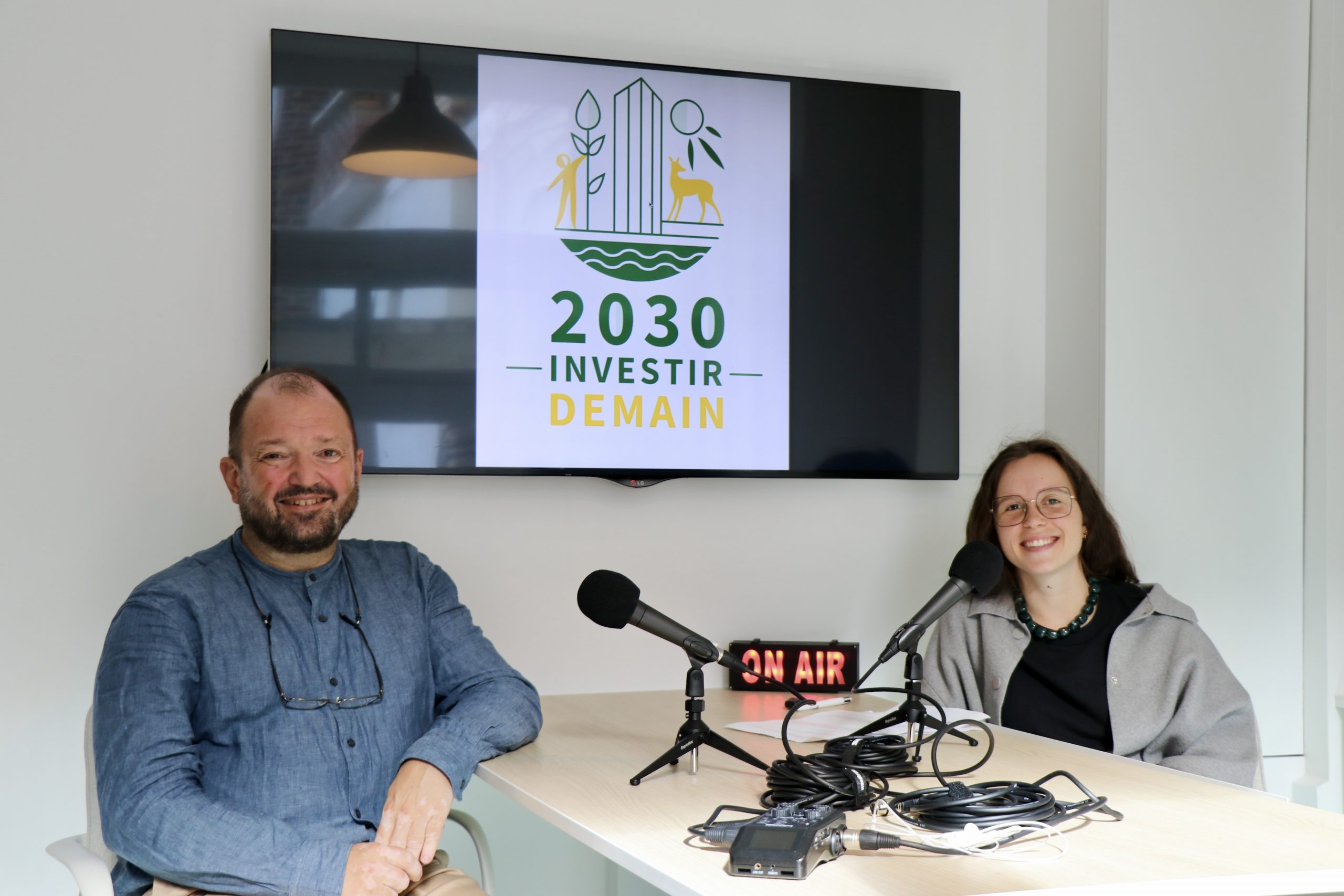
Launched in September 2024 at the initiative of the media outlets ID, L’Info Durable and L’Agefi, the Think Tank “2030, Investing in Tomorrow” aims to bring financial stakeholders together around the major challenges of sustainable finance.
To date, the initiative is structured around six thematic working groups, each co-founded with a recognized organization known for its commitment to sustainability. A podcast series accompanies this work, with each episode dedicated to one of these groups.
This episode highlights reshoring and reindustrialization through the working group “Fair (Re)localization: a competitiveness and sustainability challenge,” co-founded by Sycomore AM.
A topic at the heart of current developments
Designed as a platform for dialogue, the “2030 – Investing in Tomorrow” podcast brings together the perspectives of those who finance the transition and those who implement it on the ground. In this episode, Claire Mouchotte and Olivier Lluansi—author of “Réindustrialiser, le défi d’une génération”—discuss current reshoring and reindustrialization challenges.
Sycomore chose to focus on reshoring because recent events have brought the topic sharply into focus: supply chain disruptions linked to COVID-19, European recovery plans, the Draghi report on European competitiveness, renewed national reshoring ambitions, the introduction of tariffs, and new regulatory frameworks.
These disruptions have underscored the urgency of addressing reshoring, as Claire Mouchotte explains:
“This trend is not only at the center of current events, it also concentrates two essential dimensions for Sycomore AM: competitiveness and sustainability. Reshoring or reindustrializing has significant impacts for all stakeholders. We want to better understand these impacts and engage in constructive dialogue with companies on this topic.”
Three lenses to understand impact
Sycomore’s investment universe is broad, covering companies across sectors, sizes, and geographies.
“For each company, we approach the issue through three lenses—the ‘3 Cs’: co-workers, consumers, and local communities.”
These three lenses raise key questions: where are the company’s goods produced? How does it develop the skills required for its strategy? Does it control its value chain? Where is it located?
To answer these questions, Claire Mouchotte emphasizes the need for a broader perspective:
“We felt that Mr. Lluansi’s work on reindustrialization could help us better understand the topic and ideally share best practices with the companies we engage with.”
Changing the paradigm to protect production
From this perspective, Olivier Lluansi stresses that industry is facing a paradigm shift and must reinvent its model, with a renewed focus on production:
“As long as France and Europe remain in a system of open competition, allowing imports that do not meet the same social and environmental standards, they weaken their own production. At some point, the logic must change toward fair competition, based on genuine reciprocity: no longer accepting on the European market products that do not comply with the rules imposed on our own producers.”
Restoring the attractiveness of industrial jobs
This paradigm shift also involves restoring the appeal of industrial professions, which often struggle to attract talent.
“Industry is still too often perceived as difficult and dirty. Yet it has changed profoundly over the past 40 years. However, the image passed on to young people remains stuck in the 1970s and 1980s, despite major investments to reduce physical strain and environmental impact. We must open factories to students, teachers, and parents to show them this new reality.”
Another crucial issue is work organization. Still influenced by the mechanistic model of the first industrial revolution, industry often remains unattractive, with limited possibilities for remote work despite growing expectations regarding work-life balance. In response, Olivier Lluansi calls for stronger dialogue between unions and employers to rethink these organizational models.

