Sustainable Development and ESG Challenges: “Finance Has a Role to Play”
Sustainable development and ESG challenges: “finance has a role to play”
To conclude the first cycle of the Think Tank “2030, Investing in Tomorrow,” Claire Martinetto, Chair of the Management Board of Ecofi, and Bertrand Badré, Founder and Managing Partner of Blue Like an Orange Sustainable Capital, reflected on the key takeaways from the “Essential Resources” working group. Interview.
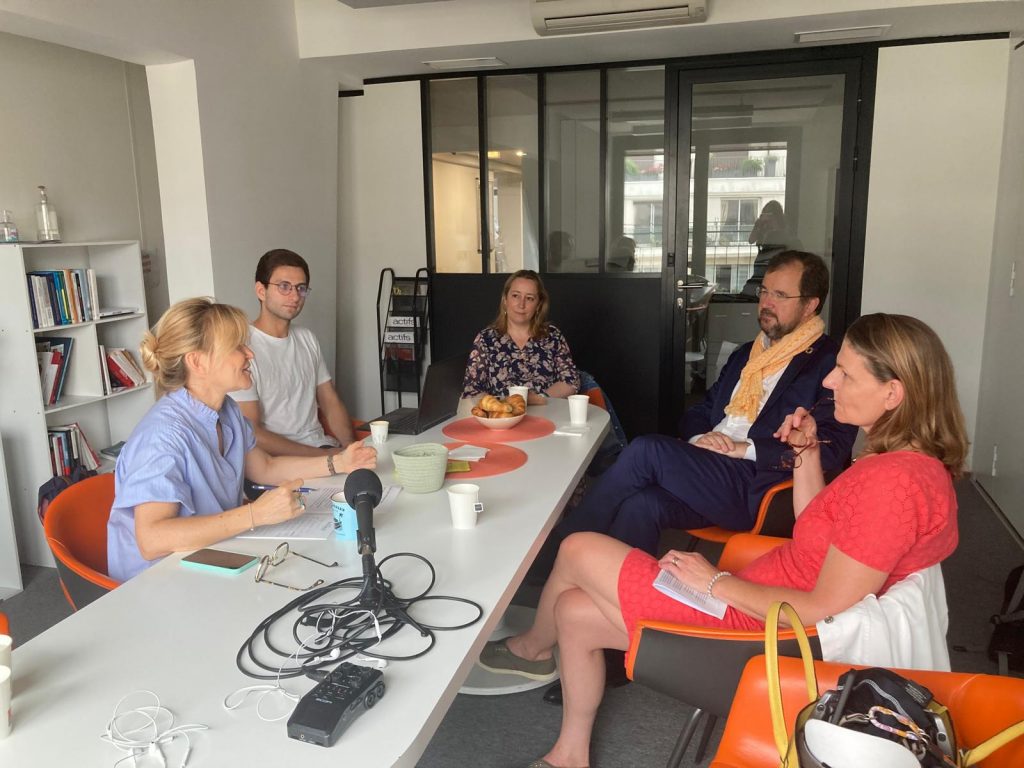
Throughout the year, the working group co-founded by Ecofi examined the management of essential resources, both natural and human. To conclude these discussions, Claire Martinetto and Bertrand Badré shared their perspectives on the findings of this work and on the challenges that sustainable finance still faces.
The ESG momentum seen in recent years appears to be losing steam, and Donald Trump’s second presidency has further heightened global uncertainty and imbalance. In your view, where does the urgency now lie in terms of transition and, more broadly, ESG considerations?
Claire Martinetto: I believe the urgency has not changed. The new Trump presidency reshuffles the cards, but the issues remain. We remain convinced that those already engaged in the transition will continue, even in the United States. However, this situation highlights that these challenges can no longer be addressed solely at the level of nation states. We cannot wait for purely political decisions, especially given how difficult it is to achieve a unified global approach. In our view, the entire ecosystem must be mobilized. At Ecofi, we have long believed that finance has a key role to play.
Bertrand Badré: My conviction is that unless we address the fundamental rules governing the market economy, we will remain at the margins. If there is such a thing as sustainable finance, it implies the existence of unsustainable finance. The risk of this divide is that we settle for a small pocket of capital financing sustainable activities, while the rest of the system continues unchanged. Until sustainability principles are embedded in accounting standards, remuneration systems, governance tools, and the daily mechanics of finance, we will remain on a voluntary—and therefore fragile—basis.
Secondly, sustainability is no longer a fashionable topic. Of course, it is not about fashion; each year is warmer than the last. But today, multiple priorities overlap, and we must consider how best to integrate sustainability into this context. For instance, economist Patrice Geoffron recently remarked, somewhat disillusioned, that the additional military spending requested of European countries far exceeds what would be needed to address climate change. While the rationale for this spending is understandable, climate issues remain equally critical. Yet geopolitical concerns now dominate the agenda.
At the same time, while many local actors, municipalities, and companies stay the course, we live in a world where states are reasserting control. Some U.S. states continue to push for sustainability, but the federal government has prevented American scientists from participating in IPCC work. We must acknowledge this new reality and adapt accordingly—while rallying the silent majority who want a positive outcome.
In this uncertain and increasingly individualistic international context, attention is turning to China, which in recent years has invested heavily in green standards and industries. Should we draw inspiration from this?
C.M.: Yes, we should closely observe what is happening in China. However, we must bear in mind the uniformity of decision-making and implementation there, whereas in our systems, fragmentation often makes consensus difficult. China has accomplished a great deal in recent years; entire cities have become livable in ways they were not twenty years ago. There are lessons to be learned, but we also have our strengths: an innovation-driven economy, strong expertise, and relatively forward-looking regulation. We have the capacity to move forward, particularly by strengthening public-private cooperation.
B.B.: China is a paradox. It is both the largest contributor to the problem and to the solution—and it is gradually shifting from one to the other. Regardless of the methods employed, they have a clear strategic vision. I believe China aims to become the leading sustainable power by 2050, not only by producing transition equipment at low cost but also by imposing its standards. While the United States is stepping back from sustainability issues and Europe hesitates, China continues to advance. Normatively, they are pioneers, and it would not surprise me if their standards became dominant within 10 to 15 years. As the primary trading partner for most countries, China’s influence spreads more easily than others’.
Can companies today be the main drivers of change?
C.M.: Some companies stand out, and they are clearly central to these issues. They must transform their value chains, offerings, and distribution models. However, progress cannot remain at the national level. Companies must be embedded in a broader ecosystem involving investors, public authorities, and local communities. This is part of what we assess before investing. Beyond any extra-financial analysis, an isolated company will struggle to remain resilient and competitive over the long term. As long-term investors, we regret the prevalence of short-term thinking, especially when China, as Bertrand noted, takes a long-term approach.
B.B.: A company alone cannot succeed, even if there is genuine willingness. In the phrase “market economy,” the word “market” is crucial. If companies are not supported by market demand—by consumers and investors—it cannot work. I often use the analogy of a cycling peloton, whose speed depends on the riders at the front. The same applies to companies. Today, we are witnessing a phenomenon of “greenhushing,” where companies no longer communicate about their sustainability practices. Yet peer pressure is essential: if no one pedals, the peloton slows down. We must rebuild a cohesive narrative on these issues, however difficult that may be.
Bertrand Badré, you have worked extensively on issues related to water management and access. Where does the urgency lie today in France and Europe?
B.B.: Water is life. It holds a sacred dimension in many cultures and is a source of numerous conflicts. Regarding resources in general, and water in particular, we alternate between phases of cooperation and shared benefits, and phases where each party seeks to secure the largest share. We see this, for example, in Donald Trump’s interest in annexing Greenland in response to resource challenges. The conflicts over water usage in France reflect the same dynamics. More broadly, we are witnessing a global trend toward individualism. The challenge is to restore cooperation.
To conclude on a more optimistic note, could you share examples of positive initiatives, such as companies that have successfully transformed themselves to enhance their ESG impact, or young firms with business models that preserve natural resources?
B.B.: At Blue Like an Orange, we have demonstrated that it is possible to achieve financial performance meeting the return expectations of traditional institutional investors while delivering tangible impact—even when that impact is not formally priced. For example, we invested in clinics in Kenya, led by American doctors and located in highly disadvantaged neighborhoods. Consultations cost only two dollars, enabling them to treat around 1,500 patients per day—over half a million annually. The atmosphere in these clinics is strikingly positive, with children playing and a welcoming environment, in stark contrast to the often somber waiting rooms of French hospitals.
C.M.: Ecofi has strong roots in the social and solidarity economy. At our scale, we create initiatives with local impact by bringing together local stakeholders, investors, and public authorities. One example is the chocolate brand Ethiquable, founded in the Gers region in the early 2000s and specializing in fair trade. In 2007, the company had 30 employees, and our investment essentially supported their working capital needs. Today, they employ 150 people, generate €75 million in revenue, have multiple locations across Europe, and have established a chocolate factory near their headquarters in Gers, creating many local jobs. It is a genuine success story. Another example I particularly appreciate, expected to be profitable from 2026, is Tom&Josette, which operates micro-nurseries within nursing homes. While the impact remains local and does not address global challenges directly, these are inspiring models that deserve attention and replication.

